Here are some selected comments from previous Andina workshops:
“The organisers succeeded in creating an atmosphere that encouraged critical debate of important and controversial topics while making sure that everyone, regardless of seniority or gender, had the opportunity to contribute and engage. The organisers created a rare beast: a safe and creative space for robust academic debate.” Professor Yvonne Buckley, Trinity College, Dublin, Andina II
“THANK YOU for having facilitated such a wonderful experience and group; it definitely changed the course of my career in a positive way. The workshop was a pivotal point in my career. Up until then, I had been feeling so isolated in my research and hadn’t seen what real collaboration and community could look like; I found that in our workshop.” Dr Emily Moberg, (Director, Scope 3 Carbon Measurement & Mitigation, WWF-US), Andina IV”
“I only knew one person at the first meeting: I was an early career scientist studying molecular evolution and population genetics of adaptation in crops, wild relatives, and weeds. The provocative discussions and creative forums at the meeting had a major impact on my subsequent research program. I also gained an expanded network that included researchers from different disciplines and greatly improved how I communicate. I was then given the chance to take on a leadership role, being asked to chair the program committee for the next meeting.” Dr Amy Lawton-Rauh, Clemson University, Andina I and II
“I attended the first ANDINA workshop, and found it to be one of the most thought provoking and productive workshops that I’ve had the privilege to attend”. Dr. Bruce Webber, CSIRO, Western Australia. Andina I and IV
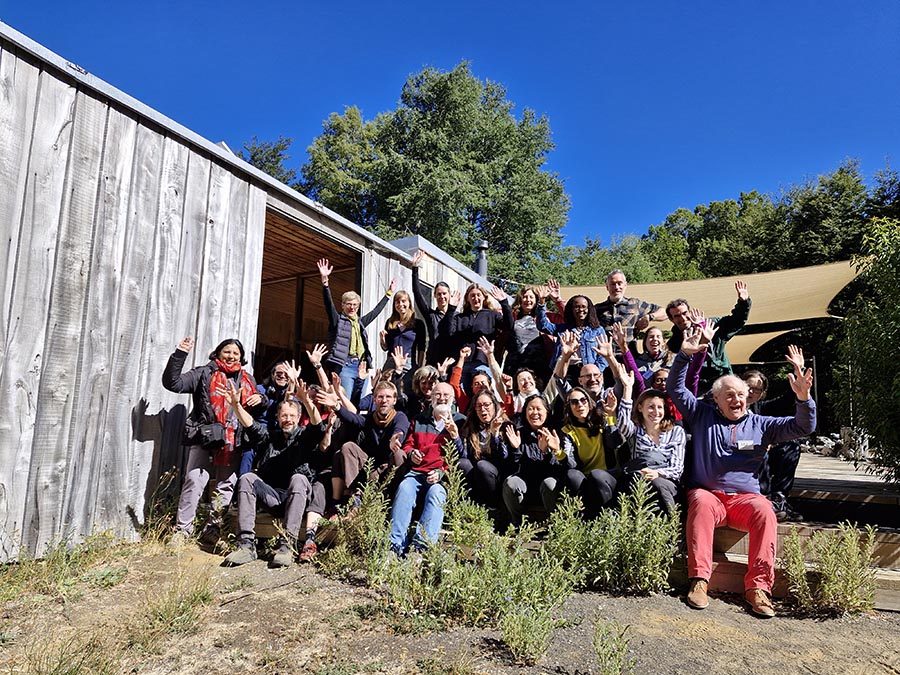
Feedback from participants of Andina VI (Chile, 2024). They were asked to state the positive outcomes of the workshop from their perspective.
‘First, this is an unique opportunity for networking for early-career ecologists: we were able to meaningfully engage and connect with senior researchers that are making a difference out there. Second, I was able to assess my own values and practices as a researchers to re-imagine my future as an ecologist: a journey that I started, but I am still in the beginning of the process. Third, it brought out potential projects that might not only advance my career, but also bring positive outcomes to society.’
‘Understanding the urgency of addressing ecological challenges; meeting and networking with inspiring ecologists; co-producing the content of the workshop outputs; seeing Conguillio landscape through the walkshop.’
‘Meeting great people, seeing a wonderful environment, feeling I helped a bit’
‘The social dimension of building trusted and generous relationships have been the best ever out of all Andina meetings – and therefore the commitment to the themes and ideas generated has been maximised – bravo’
‘I believe that the experience and standing in our society of ecologists of many researchers at the meeting greatly increases the reach of all products. Bearing in mind that some ideas may not be new, but somehow gain strength over time. Whether they are scientific papers, communications or courses for students at universities’
‘Knowing an amazing group of people interested in pushing real changes in the world. The team had a wide range of positions and with multiple experiences. It helped me to regain hope and a perspective that was part of me so many years ago. I found so challenging to find this type of energy and perspective again. I know people that may think in similar terms, but I think most just think kind of lost.’
‘Partly networking, but mainly the concrete outcomes that will follow, esp. those that will hopefully follow after the conventional publications.’
‘Gaining inspiration from a diverse, kind and passionate group of people- I feel there are different tangible tasks that address the crises from different angles, and could actually drive change. And last, having a fabulous time in a spectacular location- it’s been a week that’s been healing for the soul.’
‘Extending global south connections, identifiable pathways to impact, having the time and mental space to take a deep dive into a topic that’s relevant to my day job’
‘Network, outputs and organizing skills from being on the committee’
‘Meeting new people, talking about ideas, creating something from those conversation, being energized’
‘Connecting with ecologists from many places in the world, discussing the important concepts surrounding the social and environmental responsibilities of ecologists, learning about the local people and places in the Araucania region of Chile.’
‘Concrete feasible outputs with potential follow ups, networking and some important self reflection’
‘Among the intangible outputs of the workshop, I thoroughly enjoyed listening to and learning from people across different parts of the world, hearing about their experiences and concerns. Given my country’s context, it was also a stimulating ambience for me. As for the tangible outcomes, there are several interesting ideas for collaboration, and manuscripts/statements.’
‘Learning about ecology, making connections with amazing people, participating in meaningful conversations, spending time in beautiful places’
‘The Andina walkshop was a unique opportunity to meet an amazing, inclusive and empowering group of fellow ecologists; to reflect on our responsibilities as ecologists together with this group; and to create an astonishing list of perspective pieces on our values and responsibilities as scientists in times o global change.’
‘Stimulating conversations and concrete collaborations established. Magnificent walks with good level of physical activity’
‘Andina allowed me to engage in discourse with scholars who on the surface are completely different from me in terms of discipline and epistemology. However, what emerged was that all academics across disciplines struggle with the question of approaching research and the discipline with a radical perspective for transformational change or remain with what we know works. This was eye opening and humbling. It was incredible to meet and get to know (within the Andina time period) such amazing scholars who are also generous of spirit and generous with their time and intellect. How ideas emerged and the collaboration that allowed for the creation of tangible outputs/products was not only amazing but was an indicator of the quality of the participants. i was able to observe the facilitation of discussions/interactions/ relationship building/connections between people often seemingly on opposite sides come to a realization that maybe they’re closer in their understanding of their fields/disciplines. It was great that folks welcomed the generation of a statement of values, although sometimes muted; and perhaps this will evolve and become more bold as the participants co-create beyond Andina. I’m really amazed at all the products/outcomes that came out of Andina, particularly the curriculum development which has potential for tangible impact. I’ll need time to reflect further on my goals/objectives for attending Andina and how those were met. I loved, loved, loved the fact that so many early career scholars were present and had leadership roles.’
Feedback from participants at the Andina III workshop (Alberta, June 2016). All attendees were asked to reflect on the week. Each paragraph is an extract from a different participant. No negative comments have been omitted.
” The methods employed in the workshop to get people to come up with innovative thoughts, challenge each other, and formulate consensus ideas (e.g. World Café, trust building exercises…) were novel and exciting to me. I can see myself taking elements from these for various aspects of lab management, campus-visioning exercises, grant proposal brainstorming, and various other professional activities. As an evolutionary geneticist I rarely interact with researchers involved with the more practical side of weed control. By being in this workshop I have gained easy access to a pool of such people.”
“Sometimes in workshops there are times when I ask myself why am I here? Is this really the best use of my time? That never happened in this workshop. Whether it was meeting new people socially and talking shit, or talking over science ideas, or formally forming working groups and getting things done, this always felt like this workshop was best thing I could be doing right now. As an early career researcher the networks I started to build here feel very useful. It was great meeting, talking, working with people that I would have otherwise never meet (or even known they existed). The walks and social sessions were an important part of that, and probably allowed the work parts to happen as fast as they did. The setting was great and I was very happy there was a friendly dog.”
“I found the workshop to be refreshingly engaging and encouraging of interpersonal and interdisciplinary interaction and productivity. The process of creating the opportunity and spaces for this to occur was one of the key lessons learned.”
“I was honoured to have the opportunity to spend a week with some of the top weed scientists from across four continents. As likely the least academically experienced person in the room, I cannot overstate how welcome I felt, and how I felt my opinion was valued and fairly evaluated when given. AndinA has opened my eyes to a whole new body of literature, knowledge and experience readily available to bring value and validity to agricultural research issues. “
“The nature of the meeting allowed a much more profound set of interactions to occur than any I have ever experienced at a traditional weed science meeting. Strengthened my conviction towards collaboration.”
“I was excited to interact with experts in the social sciences to hopefully provide a new perspective to the way I think about, talk about, and address weed problems. Bringing disciplines together can work, even when one of the groups was clearly arriving skeptical.”
“Learned more about people & relationships; learned new work-shopping techniques; gained really good friends and consolidated existing ones; massaged my ego/confidence. Gained collaborators on future research projects. “
“This was a great workshop. This workshop created an “ethical space” where privilege of knowledge did not exist. this is also the way to approach and include aboriginal groups – create that ethical space. loved it overall – great people, good venue, innovative process and good steps forward for research!!”
“I am now aware of a significant gap in my knowledge that is limiting my effectiveness.”
“Man I love coming to these meetings – they meet so many aspects of who I think I am and my mission in life! They meet my social needs to expand my network and to learn from great intellects. boosting my knowledge width and depth and to keep expanding my social/institutional/scientific networks in the broad natural resource management field in which I operate. The workshops introduce me to a new body of scientific knowledge and literature – it makes me read widely. It helps sometimes with other facilitation, and evaluation projects plus I gain some more intimate knowledge of scientists, their institutions and their norms. Plus I have fun in a great landscape and as a geomorphologist the exposure to new and scientifically interesting landscapes is indeed a motivation for me.”
“I now feel far more open to working with others in a way that might substantively involve me letting go of my ‘stuff’ to a greater extent that I was at the beginning.”
Overall, I have learned a great deal from this workshop and feel that it has sparked new ideas that I will continue to think about as I finish my PhD and move into the next phases of my career. It was fascinating to engage with an environmental problem from so many different angles. Overall, I felt that the workshop provided me with motivation to continue to seek out collaborations with researchers from diverse disciplines. I now think I will put more thought into where and how I am publishing and disseminating my research to try and make the greatest impact. My discussions at the workshop also helped me more deeply understand several environmental challenges I knew very little about before the workshop.”
“I am really pleased with the connections I made and also the progress with manuscript preparations. As an early-career researcher, both the connections and publications will make a significant impact on my professional development. The meeting was well planned and organized which helped the days go smoothly. I do not really see any major shortfalls. However, I guess this workshop provided me with a unique insight into other issues where I can learn from. The manuscript exercise really brought us together and made the link between different weed management systems and social sciences. I believe that the manuscript writing process will introduce me to key social science literature and build my knowledge in this area. I would like to continue to interact with scientists in other relevant disciplines and involve them in weed management problem solving.”
“A big eye opener for me was how much material there is in other disciplines on issues that I’ve been concerned with in weed science (i.e. ways to communicate). This is important to me because ignorance of these things has limited my scope and impact as a scientist. I’ve also learned that reaching out to colleagues from other countries and continents is not as hard once the initial contact has been made. I am very much looking forward to continued collaboration with some of the scientists, particularly those who could be informal mentors for me or who work on very similar areas to me.”
“What I have appreciated most about this workshop is the opportunity to initiate conversations and, frankly, be pushed out of my comfort zone on topics that I don’t normally touch. While a feeling of discomfort may sound like a critique, I believe it is a necessary step to take in order to bridge the gaps across the various disciplines and diverse schools of thought. In the future, I would like to see even more team-building exercises among folks with very disparate backgrounds. I believe we touched on some of that here, but perhaps had lingering desires to connect but needed more time and more interaction.”
“The in-depth discussions generated by the informal atmosphere (well generated by the organizers), help internalize the ideas way beyond my expectations. As a researcher working in agriculture and striving to make his research as applicable as possible and hoping that at least some of the research product will help land-users, this was actually an important workshop.”
“I learned that my science concentric approach to research tends to carry over into my expectations of stakeholders. My personal mission has been to put more science into land management decision making. I still believe in the mission but I learned that science may not always be the complete answer to land management decisions and thus my expectations may change largely as a result of this workshop!”
“My understanding has improved immensely and I can see the benefits of working together (all warm and fuzzy). I now have a few contacts in this discipline that I may be able to work with or contact in the future.”
“This is very important to me as I have always valued working with other disciplines (rather than silos) but I have been at odds on how to achieve this. This workshop has given me a few insights. I would have liked a session (within this workshop) where we used one of the case studies, identified stakeholders and work-shopped how each of us could contribute to it (holistic approach). This might have given me a less abstract perspective on how it could work (for me) in the future.”
“While I still see this as a major systemic problem, attending Andina has given me hope that there are a good number of weed researchers who are able to navigate the system to do more in weed science than publish papers few people read. Meeting social scientists at Andina has given me a better insight into how this discipline can help improve outcomes in weed research and extension. I am now involved in helping to develop a social science-based paper! The participants have been excellent and I have had great fun as well as making many new valuable contacts. Andina is a valuable model and should continue. “
“My frustration before the workshop was that different groups do not speak to each other (in a very literal sense) – this workshop certainly overcame that issue. Physically bringing people from different fields together showed me how little engagement natural scientists have with social sciences, despite an obvious desire and self-diagnosed need to engage with it. The frustration that came through from some of the natural scientists was palpable. This must have been building from somewhere, yet had never catalysed any sort of attempt to ‘de-silo’ and bring social science theory into their work.”
“This workshop has given me an opportunity to interact with others in my own field that have a diversity of emphases and struggle with similar dilemmas. Additionally, I have gained perspectives from researchers who think a lot more about how people behave that will influence how I consider implementation in the future. I have also formed relationships with researchers from my own and other disciplines to allow future collaborations. This is important to me because I can see the limits of my science to address issues of weed control unless there’s a change in our capacity to encourage implementation. In the future, I hope better frameworks for considering social interactions will improve the impact of my weed control research.”
 Improving predictions in ecology